
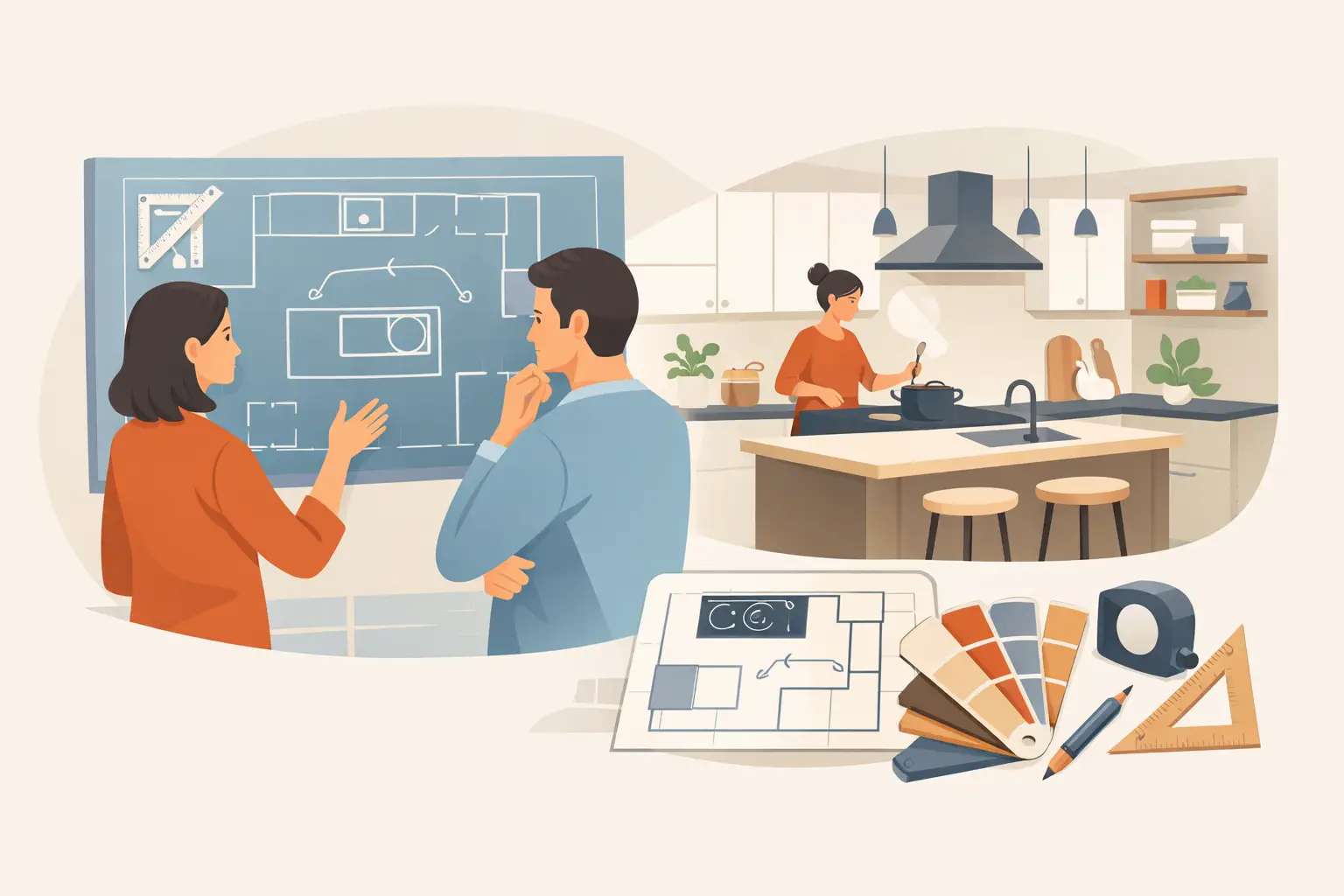
A kitchen can look great in photos and still be frustrating to use every single day. The problem usually is not the cabinet color or countertop choice. It is the floor plan. If you are figuring out how to design kitchen layout for a remodel, start with how the space needs to work for your household, not with finishes.
That matters even more in Phoenix-area homes, where kitchen remodels often happen in older layouts with closed-off rooms, undersized islands, awkward traffic paths, or appliances added over time without a clear plan. A good layout fixes those problems before money gets spent on the visible parts.
How to design kitchen layout from the ground up
The best kitchen layouts are built around movement, storage, and daily habits. That sounds simple, but most mistakes happen when homeowners skip straight to cabinet catalogs or social media inspiration. A layout should answer basic questions first. Who cooks? How often? Is the kitchen used by one person or several at the same time? Does the room need space for kids, guests, or quick weekday meals?
A kitchen used mostly for reheating food has different needs than one used for heavy cooking and entertaining. If two people regularly cook together, aisle width and work zone separation matter a lot more. If the kitchen opens into a family room, you also have to think about noise, seating, and where people naturally walk through the space.
Before choosing any shape, identify the fixed conditions. Windows, load-bearing walls, plumbing locations, exterior doors, and range hood venting all influence what is realistic. You can move some of these elements during a remodel, but every change affects budget. Sometimes the smartest layout is not the one that changes everything. It is the one that improves function without forcing unnecessary structural work.
Start with the work triangle, but do not treat it like a rulebook
Most people have heard of the kitchen work triangle – the relationship between the sink, refrigerator, and cooktop or range. It is still useful, but it is not the only thing that matters anymore. Modern kitchens often include wall ovens, microwave drawers, beverage stations, large islands, and multiple users. That means a simple triangle may not fully describe how the room works.
Still, the concept helps. You do not want the refrigerator crammed across the room from the prep area. You do not want the sink directly blocking the path between the stove and fridge. And you do not want someone grabbing drinks while another person is trying to cook dinner in the same narrow lane.
Think in zones instead of only points. The main zones are food storage, prep, cooking, cleanup, and sometimes serving. When these zones are arranged in a logical order, the kitchen feels easier to use without you really noticing why.
Choose the right layout for the room you have
There is no single best kitchen layout. The right one depends on the room size, shape, and how much renovation you are willing to take on.
A galley kitchen can work very well when space is tight. It keeps everything close and efficient, but it has to be planned carefully so it does not feel cramped. In a one-cook household, this layout often performs better than people expect. In a busier household, it can create traffic issues if both sides are too tight or if one end opens into a major walkway.
An L-shaped kitchen is common because it opens the room and gives flexibility for an island or dining area. This layout works well in open-plan homes and can create a natural prep-and-cook area without boxing the room in. The trade-off is that corners have to be handled carefully. Blind corners and hard-to-reach lower cabinets can waste storage if they are not designed well.
A U-shaped kitchen gives you a lot of counter space and storage. It is practical for serious cooking, but it can also feel enclosed if the room is small. This layout works best when the aisle width is comfortable and there is enough room to open doors and drawers without everything colliding.
A one-wall kitchen is often used in smaller homes, casitas, condos, and open remodels. It saves space and can look clean, but it depends heavily on smart storage and nearby prep surface. If everything sits on one wall, an island or separate work table often becomes important.
An island kitchen is popular for good reason, but not every room should have one. People often force an island into a space that really needs more clearance instead. If the aisles are too narrow, the kitchen will feel crowded no matter how nice the island looks.
The island question: useful or just in the way?
An island should earn its footprint. If it gives you prep space, seating, storage, or a place for a sink, it may be worth it. If it only makes the room look like a showroom while tightening the walkways, skip it.
A good island also needs the right dimensions. Too shallow, and it does not function well. Too large, and it becomes a barrier. Seating changes the equation too, because stools need clearance and affect circulation. In family kitchens, that matters a lot. Kids doing homework or guests sitting at the island should not block the cooking path.
Storage should follow behavior, not guesses
One of the best ways to decide how to design kitchen layout is to think about where things will actually go. Pots and pans belong near the cooking area. Plates and everyday dishes should be easy to reach from the dishwasher and sink. Trash and recycling should sit where prep happens, not on the far side of the room.
This is where layout and cabinetry have to work together. Deep drawers often function better than lower cabinets because you can reach what is inside without kneeling and digging. Pantry storage helps, but it needs to be placed where it supports the refrigerator and prep zone. Small appliances also need a real home, especially in kitchens where counter clutter gets out of control fast.
A lot of remodels improve appearance but leave the same daily frustrations in place. Better layout planning fixes that. It is not just about adding more cabinets. It is about putting storage where it makes sense.
Plan around traffic, not just cooking
The kitchen is rarely used only for cooking. It is usually a pass-through, a gathering spot, and a place where multiple activities happen at once. That is why traffic flow matters so much.
If the path to the backyard cuts through the cooking zone, people will constantly cross in front of the range or prep area. If the refrigerator is placed so everyone has to walk into the main work aisle to grab a drink, that creates conflict. If the dishwasher door blocks access to the sink or a main walkway when open, daily use gets annoying fast.
Good kitchen design separates through-traffic from work zones whenever possible. In open-concept homes, that can mean shifting appliance locations or adjusting island placement so guests and family members can move through the room without interfering with the cook.
Lighting, outlets, and utilities affect layout more than people expect
A layout is not just walls and cabinets. Electrical, plumbing, venting, and lighting all shape what is practical. If you want a sink in the island, that affects plumbing. If you want a cooktop in the island, that affects ventilation and electrical or gas service. If you add under-cabinet lighting, pendants, or extra receptacles, those decisions should be coordinated early.
This is one reason homeowners often benefit from working with a contractor who can handle the full scope instead of treating design, plumbing, electrical, drywall, and finishes as separate conversations. Layout choices ripple outward. The sooner the trades are aligned, the fewer expensive changes show up later.
How to design kitchen layout without overspending
A full kitchen remodel can involve demolition, framing, plumbing, electrical, flooring, drywall, cabinets, countertops, tile, paint, and appliances. Because of that, layout decisions should be tied to value, not just wish lists.
Moving a sink across the room may improve function enough to justify the cost. Moving it a few feet just because it looks better on paper may not. Removing a wall can transform a dark, closed kitchen, but if that wall carries structural load, the budget changes quickly. Enlarging a window can brighten the room and improve the sink wall, but it also adds complexity.
The right question is not, “Can this be done?” In remodeling, almost anything can be done. The better question is, “What change gives the best improvement for the money?”
For many homeowners, the best return comes from fixing circulation, adding useful prep space, improving storage, and making the kitchen feel connected to the rest of the home. Those changes have a direct effect on daily use and resale appeal.
Common layout mistakes to avoid
The most common kitchen layout mistakes are predictable. Islands get oversized. Walkways get squeezed. Refrigerators are placed too far from prep space. Dishwashers block access when open. Corner cabinets become dead space. Seating is added without enough knee room or clearance behind the stools.
Another mistake is planning only for appearance. A kitchen may look balanced on a drawing and still fail in real life if doors collide, drawers cannot open fully, or multiple people cannot move through the room comfortably.
There is also the opposite problem – being too cautious. Some older kitchens have layouts that clearly do not work, but the design never improves because every existing utility is left in place. Keeping everything where it is can save money, but it can also lock in the same problems for another twenty years.
If you are weighing those trade-offs, this is where a practical remodel plan matters. A contractor like NJSD Construction & Remodeling can look at the full picture, including structure, mechanicals, finishes, and budget, so the layout works on paper and on the job site.
A strong kitchen layout does not call attention to itself. It just makes the room easier to live in – easier to cook, easier to clean, easier to move through, and easier to enjoy long after the new cabinets stop feeling new.
Leave a Reply