
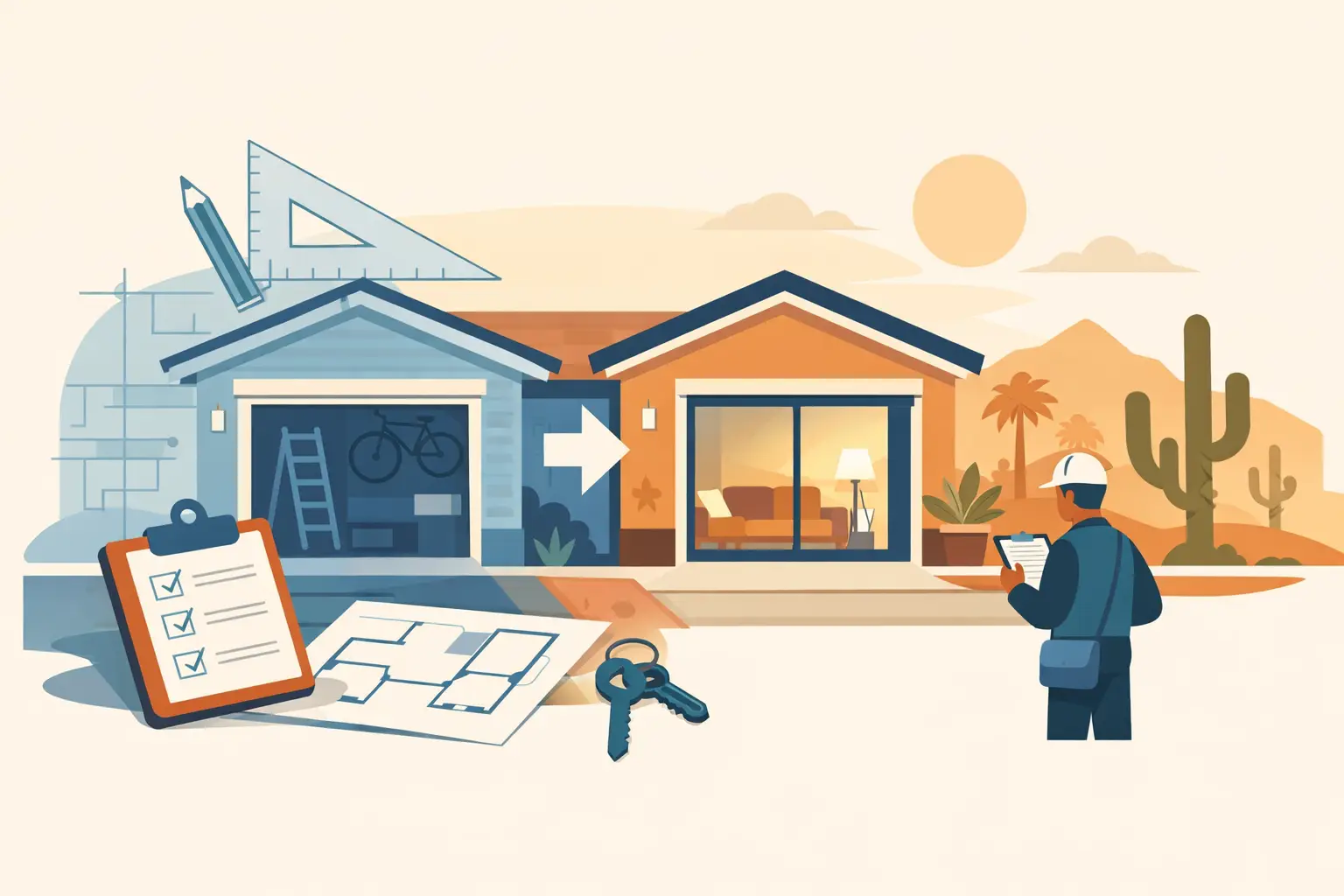
A garage conversion can look simple from the street. Frame a wall, add some flooring, bring in air conditioning, and now you have an office, bedroom, gym, or casita. But if you want to know how to convert garage legally, the real work starts long before drywall goes up.
In Phoenix and the surrounding metro area, legality comes down to more than good construction. You need the right approvals, code-compliant plans, proper electrical and HVAC work, and a finished space that meets residential standards. If you skip those steps, you can end up with fines, problems during resale, insurance issues, or a room the city makes you undo.
What legal really means for a garage conversion
A legal garage conversion is not just a finished room. It is a space that meets local zoning rules, building code requirements, and permit standards for the way it will be used.
That distinction matters. Converting a garage into a playroom for your family may trigger one set of requirements. Turning it into a bedroom, guest suite, rental unit, or detached casita can trigger more. Plumbing, egress, insulation, ceiling heights, parking requirements, and utility upgrades all depend on the final use.
This is where homeowners get into trouble. They assume the project is small because the structure already exists. The city usually sees it differently. Once a garage becomes conditioned living space, it has to perform like the rest of the house.
How to convert garage legally: start with zoning and use
Before you talk about finishes, talk about use. Are you converting the garage into a bedroom, home office, media room, in-law space, or separate living area? That answer affects nearly everything else.
In Phoenix-area cities, zoning and local ordinances may limit what is allowed on a property. A simple attached garage conversion used as part of the main house is often more straightforward than creating a separate unit with its own kitchen and bath. If you are planning a casita, guest house setup, or rental-style layout, you may be dealing with accessory dwelling unit rules, lot coverage limits, setbacks, parking requirements, or occupancy restrictions.
HOAs can also create another layer. Even when the city allows a conversion, your community rules may limit exterior changes, parking arrangements, or the use of the space.
The practical move is to confirm three things early: what the new room will be used for, whether local zoning allows that use, and whether losing enclosed parking creates a problem for your property.
Permits are not optional if you want it done right
If you are serious about how to convert garage legally, plan on permits. In most cases, a garage conversion will require building permits, and often electrical, mechanical, or plumbing permits as well.
That is not red tape for the sake of it. Permits are what put the project on record and trigger inspections at the right stages. They help verify that framing, insulation, wiring, HVAC, windows, and any plumbing work meet code.
Unpermitted work may seem faster at first, but it tends to cost more later. Buyers ask questions. Appraisers notice square footage discrepancies. Insurance carriers may deny claims tied to noncompliant work. And if a city inspector gets involved after the fact, corrections are usually more expensive than doing it properly from the start.
A good contractor helps you sort out which permits are needed, what drawings may be required, and how to schedule the work so inspections do not delay the project.
The garage has to meet living-space code
This is the part many homeowners underestimate. A garage is built differently from a living room or bedroom. To convert it legally, the space usually needs upgrades in several areas.
Floor height and slab conditions
Garage slabs are often lower than the main house floor, and they may slope toward the overhead garage door. That slope works for drainage, not for finished living space. Depending on the design and local code requirements, the floor may need leveling or a new raised system to create a proper finish surface.
Insulation and energy performance
A Phoenix garage gets hot fast. If the walls, ceiling, and garage door area are not insulated correctly, the room will never feel right and may not meet energy standards. Once the garage door is removed or enclosed, that new wall assembly needs to be built and insulated like exterior wall construction, not patched together like a temporary enclosure.
Windows and egress
If the converted space will be used as a bedroom, egress rules matter. Occupants need a safe way out in an emergency, which can mean specific window sizing and placement. Natural light and ventilation requirements can also apply.
Electrical capacity
Garages often have limited outlets and lighting designed for storage or parking, not everyday living. A legal conversion typically needs new circuits, receptacle spacing that meets code, and upgraded lighting. If you are adding a mini split, bathroom, kitchenette, or laundry area, the electrical load may need a closer review.
HVAC
Running a portable unit in the corner does not turn a garage into conditioned living space. The room needs proper heating and cooling sized for the space and installed to code. In Phoenix, this is not a comfort upgrade. It is essential.
Fire and safety separation
If part of the garage remains and part becomes living space, separation details matter. Fire-rated assemblies, door requirements, and wall construction may come into play depending on the layout.
Plumbing changes can make the project more complex
A garage conversion without plumbing is usually simpler than one with a bathroom, laundry, or kitchenette. Once you start cutting slab, extending drains, adding venting, and tying into water lines, the project becomes more involved.
That does not mean you should avoid it. It just means you should budget accurately and plan carefully. In some homes, the garage location makes plumbing relatively manageable. In others, it can drive a large share of the cost and schedule.
This is one reason design matters early. A smart layout can reduce trenching, avoid unnecessary rerouting, and keep the project efficient.
Parking and resale are part of the legal conversation
Homeowners usually focus on permits and code. Cities and buyers also care about parking and function.
Some neighborhoods or municipalities require a certain number of off-street parking spaces. If converting the garage removes covered parking, you may need to show that the property still meets local requirements with a driveway or other approved arrangement.
There is also the market side. A legal conversion can add usable square footage and increase appeal, especially when families need extra room or investors want more flexible layouts. But in some neighborhoods, losing a garage can hurt resale if buyers strongly value enclosed parking, storage, or workshop space. It depends on the home, the lot, and the area.
That is why the best conversions solve a real need without creating a bigger problem somewhere else.
Common mistakes homeowners make
The biggest mistake is treating the job like a cosmetic remodel. Paint and flooring are the easy part. The hard part is making the space legal, comfortable, and accepted as living area.
Another common issue is starting work before plans are settled. Homeowners demo the garage door, add framing, or run unpermitted electrical work, then try to figure out legality later. That usually creates rework.
Low-budget shortcuts also show up fast in garages. Poor insulation, undersized HVAC, no moisture planning, and bad floor prep can turn a new room into the hottest and least comfortable part of the house.
And finally, some people assume any contractor can handle a garage conversion. This kind of project touches framing, drywall, electrical, HVAC, windows, doors, sometimes plumbing, and often structural and permitting coordination. It helps to work with a contractor who handles the full scope instead of leaving you to manage multiple trades.
What a smoother process looks like
A solid garage conversion usually starts with a site visit and a clear conversation about your goals. From there, the scope gets defined, code issues are identified, and plans are prepared if needed. Permits are pulled before construction starts, not halfway through.
Then the work moves in the right order – framing, utility rough-ins, inspections, insulation, drywall, finishes, and final approvals. That sequence matters because each phase affects the next one.
For homeowners in the Phoenix area, this is where an experienced general contractor can save time and prevent expensive backtracking. NJSD Construction & Remodeling handles projects that require multiple trades under one roof, which makes a difference on conversions where coordination is half the battle.
Cost depends on what you are really building
There is no honest one-size-fits-all number for a legal garage conversion. A basic conditioned bonus room costs less than a full casita with a bathroom, kitchenette, upgraded service, and exterior modifications.
The biggest cost drivers are usually plumbing, HVAC, electrical upgrades, structural changes, window and door additions, and finish level. Permit costs and plan requirements also vary by city and project type.
If you want a realistic number, the best approach is to price your actual scope, not a generic online estimate. Two garages with the same square footage can have very different budgets based on slab condition, intended use, and how much infrastructure needs to change.
A garage conversion can be one of the smartest ways to create livable space without building a full addition. But if you want the space to count, feel right, and hold up over time, legality has to be part of the plan from day one. Start with the rules, build with the right team, and you will end up with a room you can actually use with confidence.
Leave a Reply